
Homage to the 80's
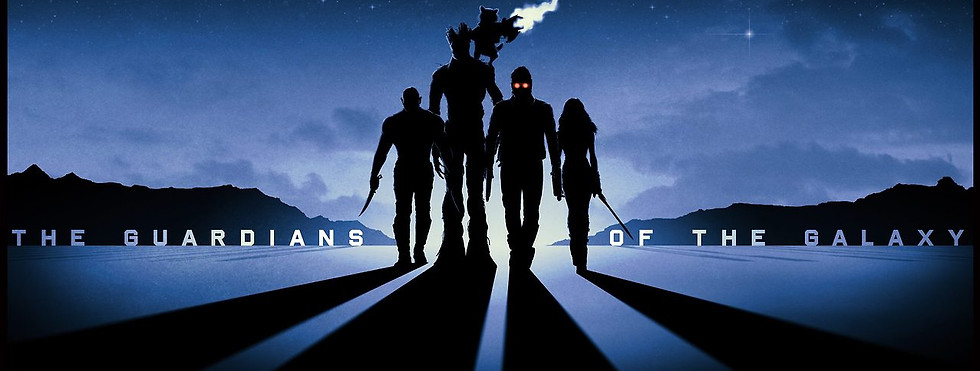
In the first scene of the film, set on Earth in 1988, the audience meets a young Peter Quill who has just witnessed his mother’s death. In an emotional outburst, Peter runs away from the hospital, only to be abducted (or rescued) by Yondu and his team of Ravagers [seen in image 1 and 2]. The only thing Peter has on him is his rucksack with a few childhood belongings, and the memory of 1980’s America. This scene sets up the tone of the film and the character; through the many nods and references to 70’s/80’s pop culture, how it impacts the character of Peter, influences the style of the film and how it creates a sense of nostalgia for the audience.

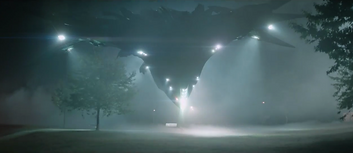
Image 1
Image 2
The film includes so many explicit references and pays homage to 1970’s/80’s popular culture, that it creates a familiar setting for the audience, in a film set in the far ends of the galaxy.
Guardians of the Galaxy uses popular culture references to create comedy in the film but also give depth to the character of Peter Quill; it makes him more relatable for the audience, so they can associate themselves with him, especially an older audience who grew up in the 80’s and understand first-hand what he’s referring to. Using the concept of intertextuality, any text such as Guardians can be seen as “a mosaic of quotations” (Kristeva, 1986. p.37), these quotations are used by the author to create an emotional response in the audience and make them more invested in the text.
The symbols used within texts “have come to represent a new kind of emotional currency in Hollywood, the currency of intertextuality.” (Nerdwriter1, 2016), intertextuality is used to create an emotional connection. With intertextuality audiences can interpret the text how they want to, instead of how the author intended it to be, because they’ve had different experiences with the text that is being referenced.

Image 3
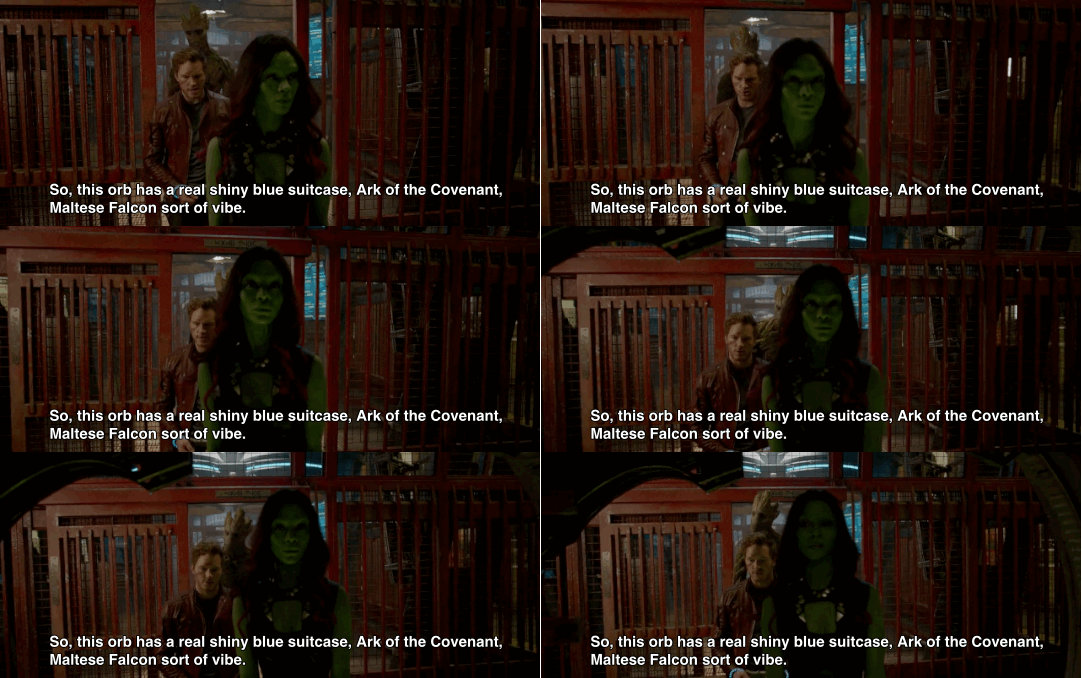
For example, in the beginning of the film, after Quill danced his way through the title sequence, the scene becomes a homage to Spielberg’s Raiders of the Lost Ark (1981). Peter Quill retrieving the orb in an abandoned ancient city is a direct parallel to Indiana Jones retrieving the golden idol in the the Temple of the Chachapoyan Warriors, as seen in image 3. This scene is used as a form of signposting; Gunn is showing the audience that they can expect a heavy influence of 80’s action and adventure genre tropes throughout the film.
Robert Stam describes intertextuality being the “literal presence of one text within another” (2000, p. 207), like a quote within a text, which is what this scene is trying to represent. In 1981 Spielberg used this scene to introduce what would soon become one of the most famous movie characters of all time (Empire, 2015), and Gunn uses it to introduce audiences to his adventurer, and set up the overall genre and tone of the film.
As well as parallels to scenes in Indiana Jones, the look of the character is also inspired by Jones; leather jacket, a distinct head piece, a sacred item that hangs on their belts (Walkman and whip) and the famous satchel. There’s also a direct reference to Raiders of the Lost Ark where Quill’s character states “so this orb has a real… Ark of the Covenant… sort of vibe”. This can be seen as an example of “cultural recycling” (Mireia, 2005. P.201) a term influenced by Kristeva’s concepts of intertextuality and Bakhtin’s concepts of dialogism, meaning that previous texts can be taken and used in a new context, a form of adaption, Gunn is using similar scenes to tell his own story.
Raiders of the Lost Ark - Opening Scene.
Guardians of the Galaxy - Opening Scene.
The action and adventure films from the 1980’s had the same effect for that generation, as the current Marvel movies have on the present generation; it’s a means of escapism, film has always been a way to escape everyday reality (Addis, 2010).
Leave a comment:
It’s not just pop culture references in the film, many mentions of other Marvel comic books. Quill himself mentions things like Ninja Turtles, Footloose/Kevin Bacon and John Stamos, there’s a Troll toy (which is then used to replace the orb), and in one scene you can see the slugs from Gunn’s 2006 film Slither. Other references to thigs in the Marvel Universe like Howard the Duck (image 4) and Cosmo the Dog (image 5) are briefly seen in the film. Having nods to other comic books in the marvel universe and references to pop culture creates different meanings to different audiences depending on age, social and cultural context etc. In their essay Rae and Gray state that audiences who go and see comic book movies will experience the film differently, “creating two very different textualities for the film” (Gordon, 2007. P. 86). Audiences will leave the film with a feeling of heavy nostalgia or wanting to look more into the Cosmic Marvel Universe.


Image 4
Image 5